Driven by Excellence. Defined by Readiness.
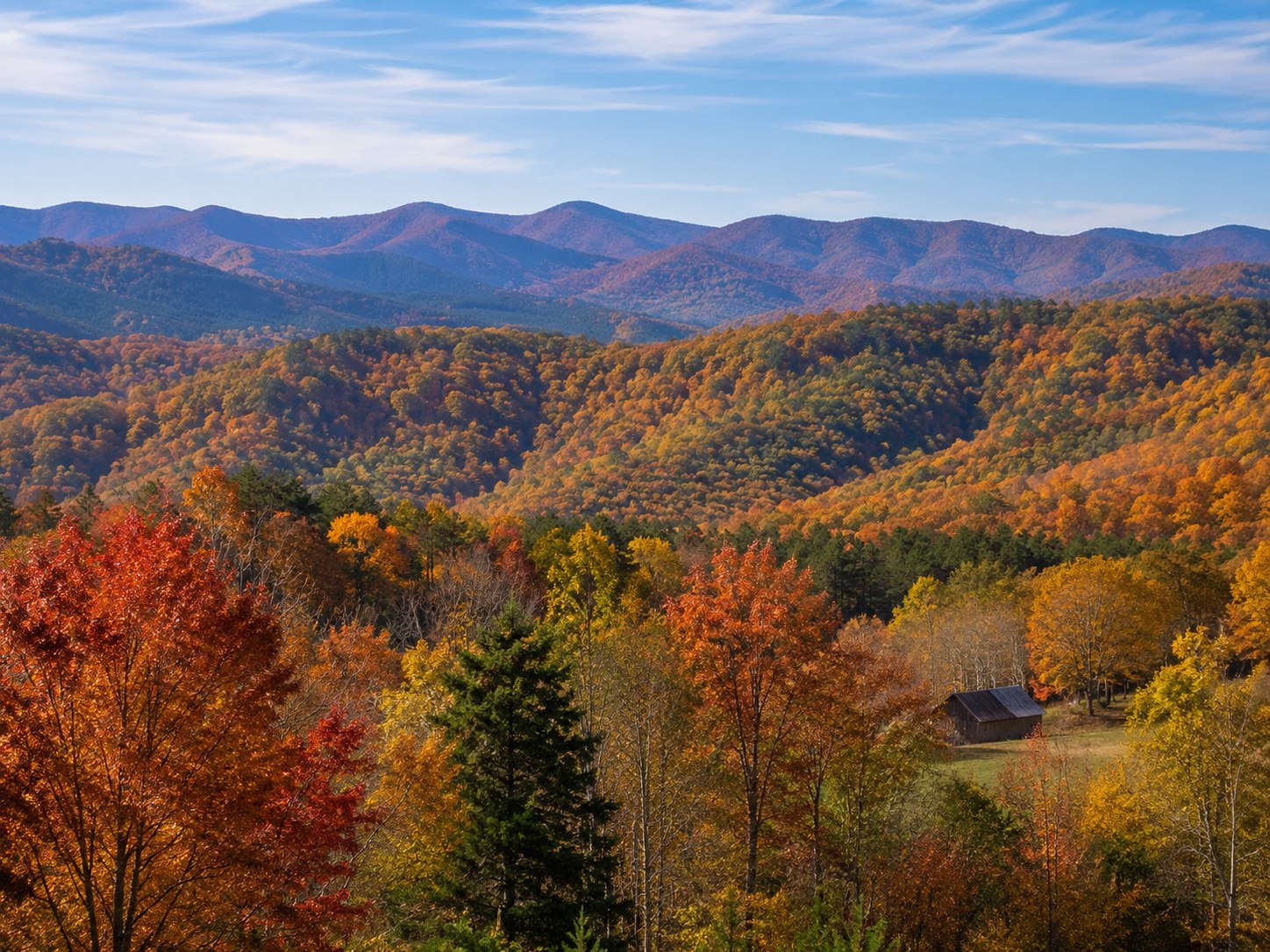
Gilmer County Fire/Rescue delivers integrated fire, EMS, rescue, and specialized response across one of North Georgia's most demanding operating environments. Steep terrain, remote roadways, rivers, forests, rapid growth, and seasonal tourism create incidents that require disciplined readiness, advanced capability, and sound operational judgment.
Our department is built around high standards in training, clinical care, rescue operations, and emergency response. We invest in advanced prehospital medicine, modern apparatus and equipment, technical rescue capability, and regional partnerships that strengthen response beyond jurisdictional boundaries.
Our personnel train for complex incidents, operate with a high degree of clinical and technical capability, and contribute to the development of other public safety professionals through regional training and collaboration. From routine emergencies to high-risk, low-frequency events, our focus remains the same: bring the right people, the right capability, and the right level of care to the incident.
Driven by Excellence. Defined by Readiness.
Gilmer County Fire/Rescue is a career fire and EMS organization providing fire suppression, advanced emergency medical care, rescue, and specialized response services throughout Gilmer County.
Our operating environment demands versatility. Steep terrain, winding roadways, rivers, forests, remote locations, major highways, expanding development, tourism, and outdoor recreation create incidents that can quickly become complex. We prepare accordingly.
Our personnel operate from strategically located stations with the training, equipment, clinical capability, and operational support needed to respond across the county 24 hours a day.
Advanced Emergency Medical Care
Bringing advanced care closer to the patient.
Gilmer County Fire/Rescue operates an EMS system built around capable clinicians, progressive medicine, modern equipment, and continued professional development.
Our ambulances are equipped for advanced prehospital care with LIFEPAK 35 cardiac monitors, transport ventilators, IV infusion pumps, mechanical CPR, video laryngoscopy, power cots, Stryker Power-LOAD systems, and other equipment designed to support high-acuity care in the field.
Our protocols are designed to allow EMTs, Advanced EMTs, and paramedics to use the full scope of their training and certification. Providers are expected to assess, make sound clinical decisions, and deliver meaningful treatment before the patient reaches the hospital.
Advanced programs further extend that capability. Prehospital blood administration allows our clinicians to begin treating life-threatening hemorrhage at the patient's side, an important capability in a rural mountain community where distance, terrain, and time can directly affect patient care.
Clinical readiness goes beyond equipment.
Our personnel train continuously in assessment, airway management, cardiac care, trauma, resuscitation, blood administration, critical-care equipment, and high-risk decision-making. The goal is simple: develop clinicians who are prepared to perform when the call is difficult and the margin for error is small.
For our community, that means advanced emergency medical care is available where it matters most: at the patient's side.
For EMS professionals, it means more.
You will work in a system that invests in your clinical development, gives you access to advanced equipment and progressive protocols, and expects you to use your training.
Come here to practice medicine, build experience, and grow as a clinician.
Fire and Rescue Operations
Ready for more than the call type.
At Gilmer County Fire/Rescue, no two incidents are exactly alike. A structure fire can become a rescue. A vehicle crash can turn into a technical operation. A medical call can happen miles from pavement. Terrain, weather, access, and changing conditions can quickly reshape the problem.
That is why our crews train beyond the initial dispatch.
Our personnel prepare to operate across a wide range of fire, rescue, and special-response environments, including:
- Structural firefighting
- Vehicle extrication and roadway rescue
- Swift water rescue
- Boat operations
- Rope and technical rescue
- Wildland fire response
- Drone-supported operations
- Search and rescue
- Remote and difficult-access incidents
The objective is simple: give our crews and incident commanders the capability to adapt when the incident becomes more complex than expected.
For the community, that means a department prepared to respond across the places people live, travel, work, and recreate.
For the firefighter or rescue professional looking for more from the job, it means something different.
It means more disciplines to master. More opportunities to train. More challenging incidents. More responsibility. And a team that expects you to keep building your capability throughout your career.
When the standard response is not enough, our job is to be ready for what comes next.
Training and Professional Development
Readiness is built before the call.
Gilmer County Fire/Rescue treats training as an operational responsibility, not simply a certification requirement.
Our dedicated training center supports hands-on instruction, including live-fire training, and gives personnel opportunities to develop skills across fire suppression, emergency medical care, vehicle extrication, rescue, special operations, and incident management.
Training is built around the conditions our personnel may actually encounter in the field. Crews work through the decisions, complications, equipment, and teamwork required when an incident becomes more complex than expected.
The goal is not simply to maintain credentials. It is to develop firefighters, EMTs, paramedics, officers, and rescue personnel who can recognize problems early, make sound decisions, and perform effectively under pressure.
Professional development also extends beyond our own department. Gilmer County Fire/Rescue supports interagency training and regional collaboration that allow personnel from multiple organizations to learn together before they are expected to operate together during an emergency.
For those who want to keep growing.
Members have opportunities to expand their fire, EMS, rescue, technical, and leadership capabilities throughout their careers.
You should leave training better prepared for the next call than you were when you arrived.
Operational Readiness
Prepared before the tones drop.
Readiness is an expectation on every station, every apparatus, and every shift.
Crews inspect apparatus, verify medical supplies, maintain equipment, train, review operational concerns, and address problems before those problems reach an incident scene.
That discipline matters because emergencies rarely provide time to correct something that should have been handled earlier.
When the call comes in, the equipment should be ready, the apparatus should be ready, and the crew should already understand its responsibilities.
Operational readiness is not one inspection or one training day.
It is the daily work that makes reliable emergency response possible.
The standard is simple.
Be ready before someone needs you.
Specialized Response
Capability when the incident demands more.
Not every emergency can be solved with a conventional engine, ambulance, or rescue company.
Gilmer County Fire/Rescue maintains specialized capabilities that allow incident commanders to adapt when terrain, water, access, weather, or incident complexity changes the problem.
Those resources support operations involving technical rescue, swift water and boat response, vehicle extrication, wildland incidents, search operations, drones, and remote or difficult-access emergencies.
Specialized capability is developed around operational need rather than simply acquiring equipment or creating specialty teams.
We evaluate emerging risks, field experience, training needs, and lessons learned to determine where additional capability can make our response safer and more effective.
The result is a department with more options when the routine response is no longer enough.
Community Risk Reduction
Service begins before the emergency.
The most successful emergency response is sometimes the incident that never occurs.
Gilmer County Fire/Rescue works beyond traditional emergency response through fire prevention, inspections, public education, community outreach, preparedness activities, and partnerships with organizations throughout the county.
These efforts help identify hazards, improve public awareness, reduce preventable emergencies, and prepare residents to respond appropriately when something does happen.
Community risk reduction also gives our personnel an opportunity to meet the people we serve before they are experiencing one of the worst moments of their lives.
That relationship matters.
Our responsibility is not limited to responding after something goes wrong. It includes helping make the community safer before the call is ever placed.
A Complex Operating Environment
Terrain changes the problem. Preparation changes the response.
Gilmer County is not an easy place to provide emergency services.
Mountain terrain, steep grades, narrow and winding roads, waterways, severe weather, forested areas, remote residences, limited access, and extended transport distances can influence nearly every part of an emergency operation.
A structure fire may have limited apparatus access.
A medical emergency may occur miles from the nearest hospital.
A vehicle crash may require a difficult extrication on a mountain road.
A search or rescue may take personnel well beyond the reach of conventional emergency vehicles.
Those realities shape how Gilmer County Fire/Rescue trains, equips, deploys, and prepares its personnel.
Our system is built around the environment we actually serve, not the environment we wish we had.
For our community, that means preparation based on reality.
For our personnel, it means learning how to operate when the easy solution is not available.
Continuous Improvement
Meeting the standard is the starting point.
Gilmer County Fire/Rescue continually evaluates how we train, equip, deploy, lead, and support our personnel.
We invest in areas such as clinical care, apparatus, technology, specialized response, training, leadership development, and regional partnerships when those investments strengthen operational capability or improve the service we provide.
But progress cannot be measured by equipment purchases alone.
A new apparatus means little without trained personnel.
Advanced medical equipment means little without competent clinicians.
Specialized resources mean little without disciplined training, leadership, maintenance, and deployment.
The real measure of improvement is whether our people are better prepared, whether our systems work more effectively, and whether the department can perform reliably when conditions are difficult.
We continue to learn from experience, evaluate what works, correct what does not, and build capability where the need is real.
Better equipment matters. Better systems matter. Better-prepared people matter most.
Built for Gilmer. Ready Wherever We're Needed.
Six core service areas support emergency response, preparedness, prevention, and community safety across Gilmer County. Our training, specialized capabilities, and interagency partnerships also allow our personnel to support larger incidents and mutual-aid operations beyond county lines when needed.
Fire Suppression
Structure, vehicle, and wildland fire response from 17 stations positioned throughout Gilmer County. Our crews operate across mountain roads, remote communities, forested areas, and growing population centers around the clock.
Emergency Medical Services
Advanced prehospital care is delivered by EMTs, Advanced EMTs, and paramedics using modern cardiac monitoring, transport ventilators, infusion pumps, mechanical CPR, advanced airway equipment, clinical decision-support tools, and prehospital blood products.
Our clinicians are equipped and trained to manage critically ill and injured patients from first contact through transport.
Special Operations
Vehicle extrication, rope and technical rescue, swift water rescue, boat operations, Wildland Search and Rescue, and UAS-assisted search and mapping extend our reach when terrain, access, or incident complexity goes beyond a traditional response.
These capabilities prepare our crews to operate across Gilmer County's rivers, forests, mountains, and remote areas while also supporting mutual-aid and larger-scale incidents when requested.
Fire Prevention & Life Safety
Inspections, permitting, code enforcement, and life-safety oversight help identify hazards before they become emergencies.
Our Fire Marshal's Office works with residents, businesses, builders, and community partners to reduce risk and support safe growth throughout Gilmer County.
Emergency Management
Emergency planning, preparedness, incident coordination, resource management, and interagency collaboration help Gilmer County prepare for emergencies that extend beyond a single fire, EMS, or law-enforcement response.
From severe weather and major incidents to broader regional events, Emergency Management helps coordinate people, resources, and agencies when the response becomes larger and more complex.
Community Risk Reduction & Public Education
Prevention begins long before the first unit is dispatched.
School programs, CPR education, home-safety initiatives, wildfire defensible-space guidance, and community outreach help residents recognize hazards, prepare for emergencies, and make safer decisions before 911 is ever called.
The Team Behind Every Response.
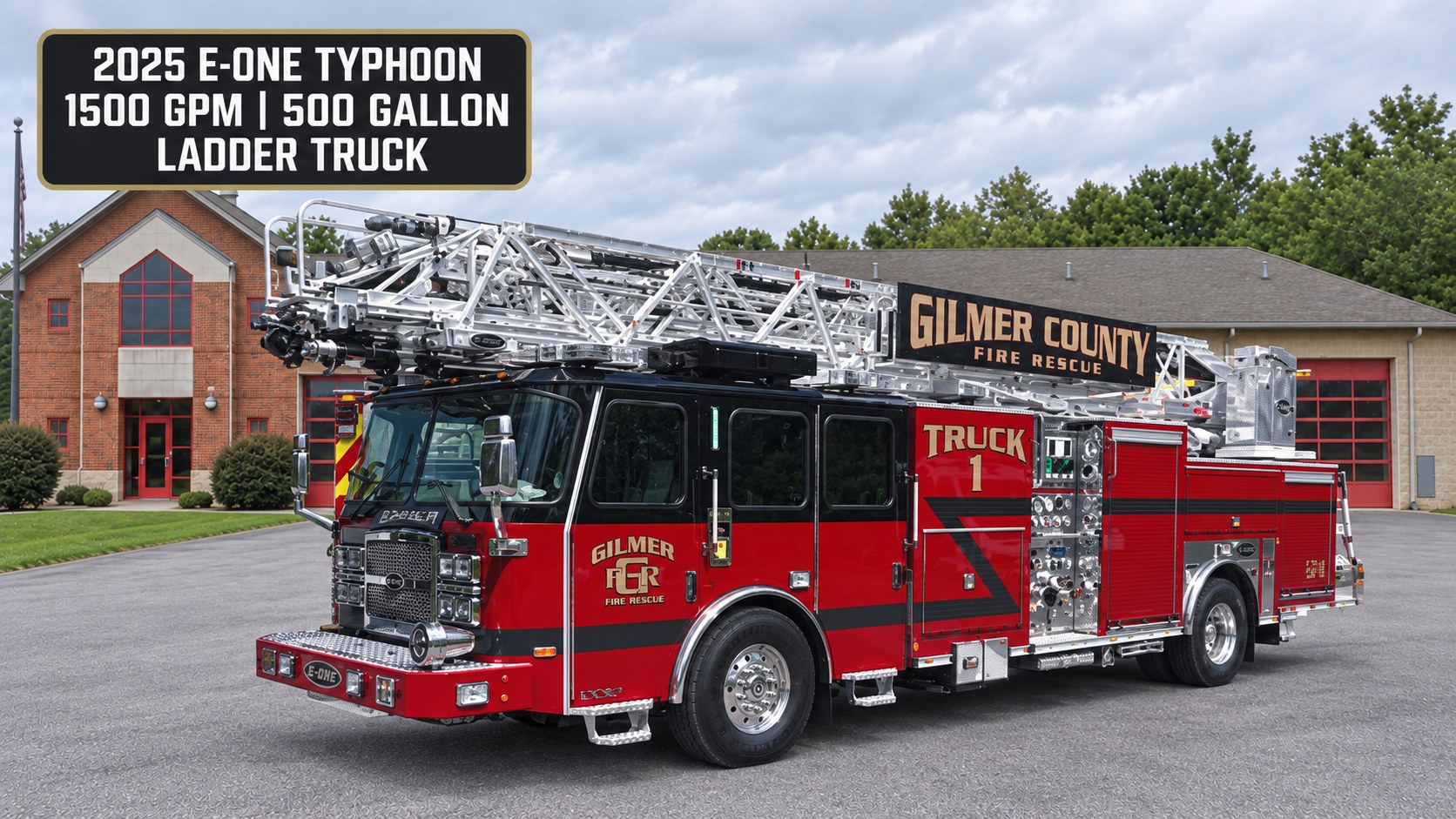
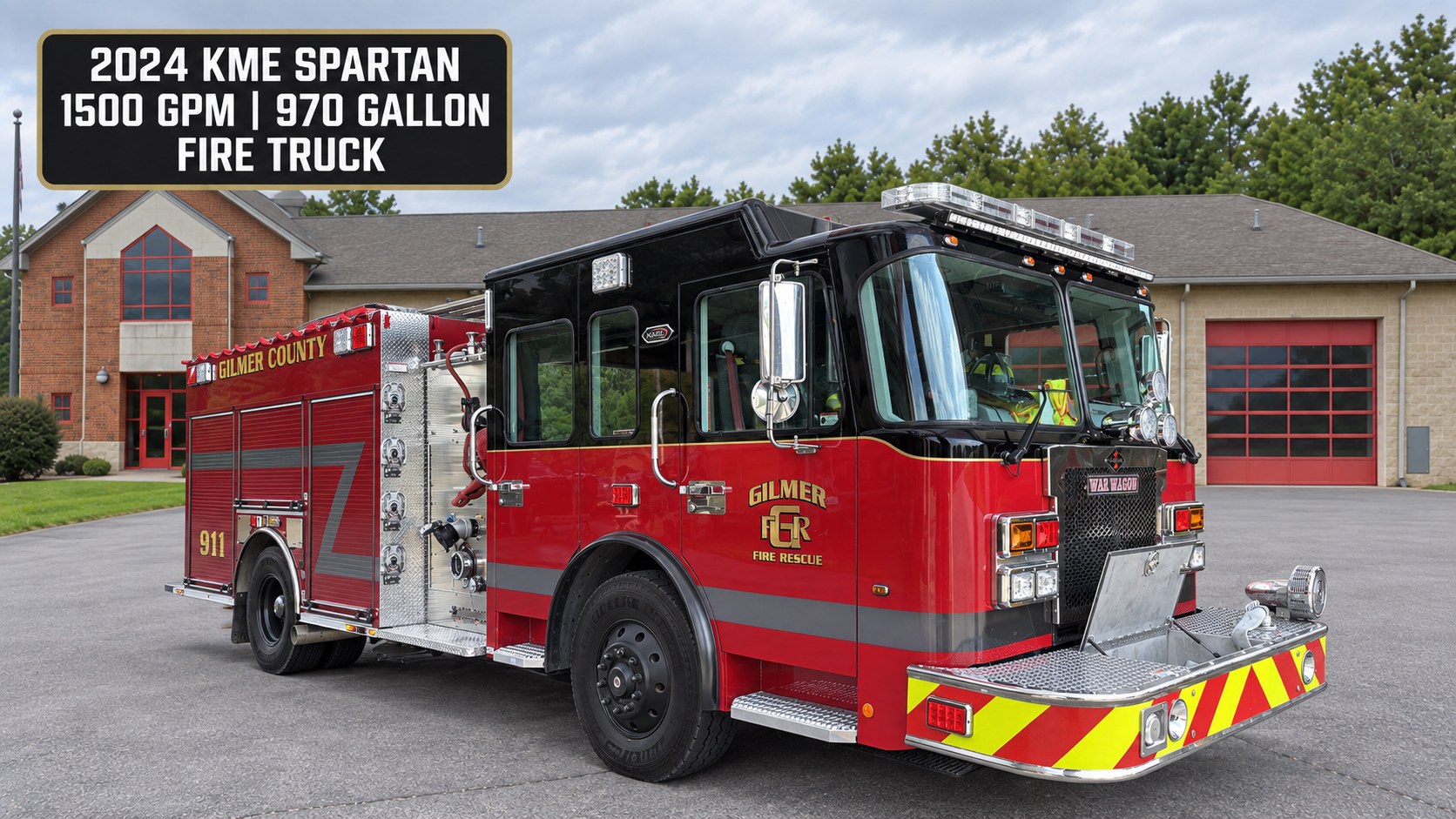
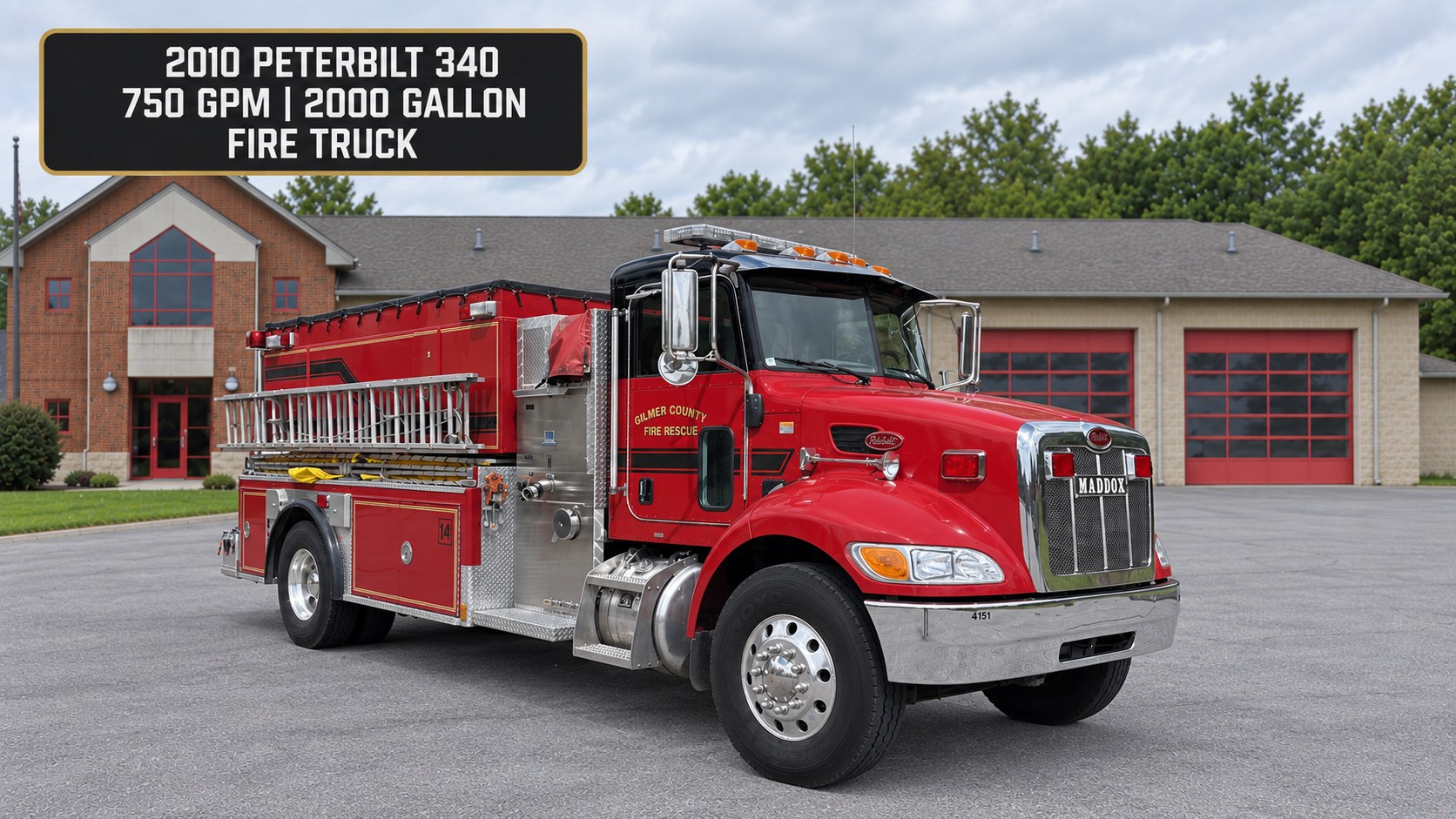
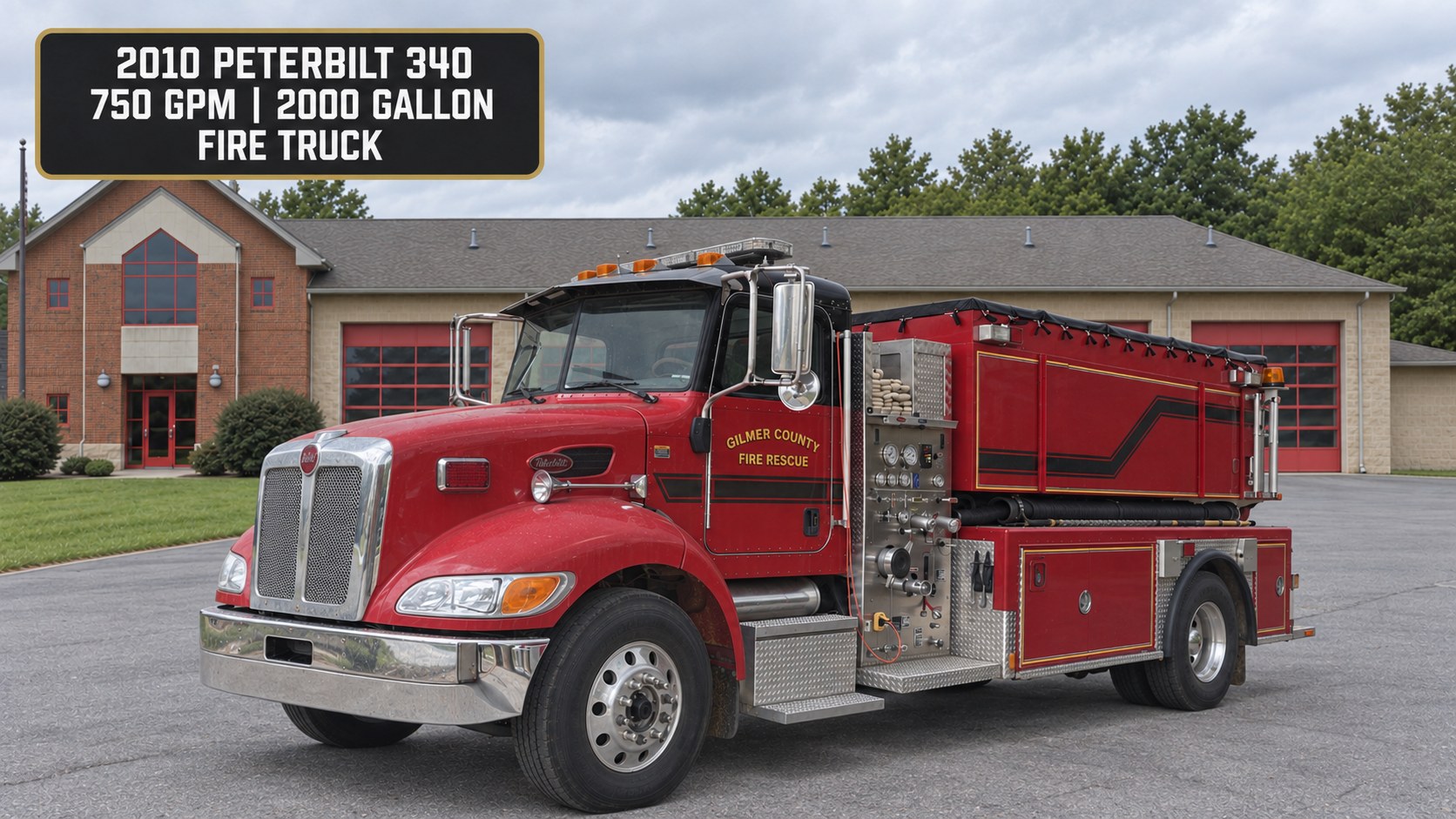
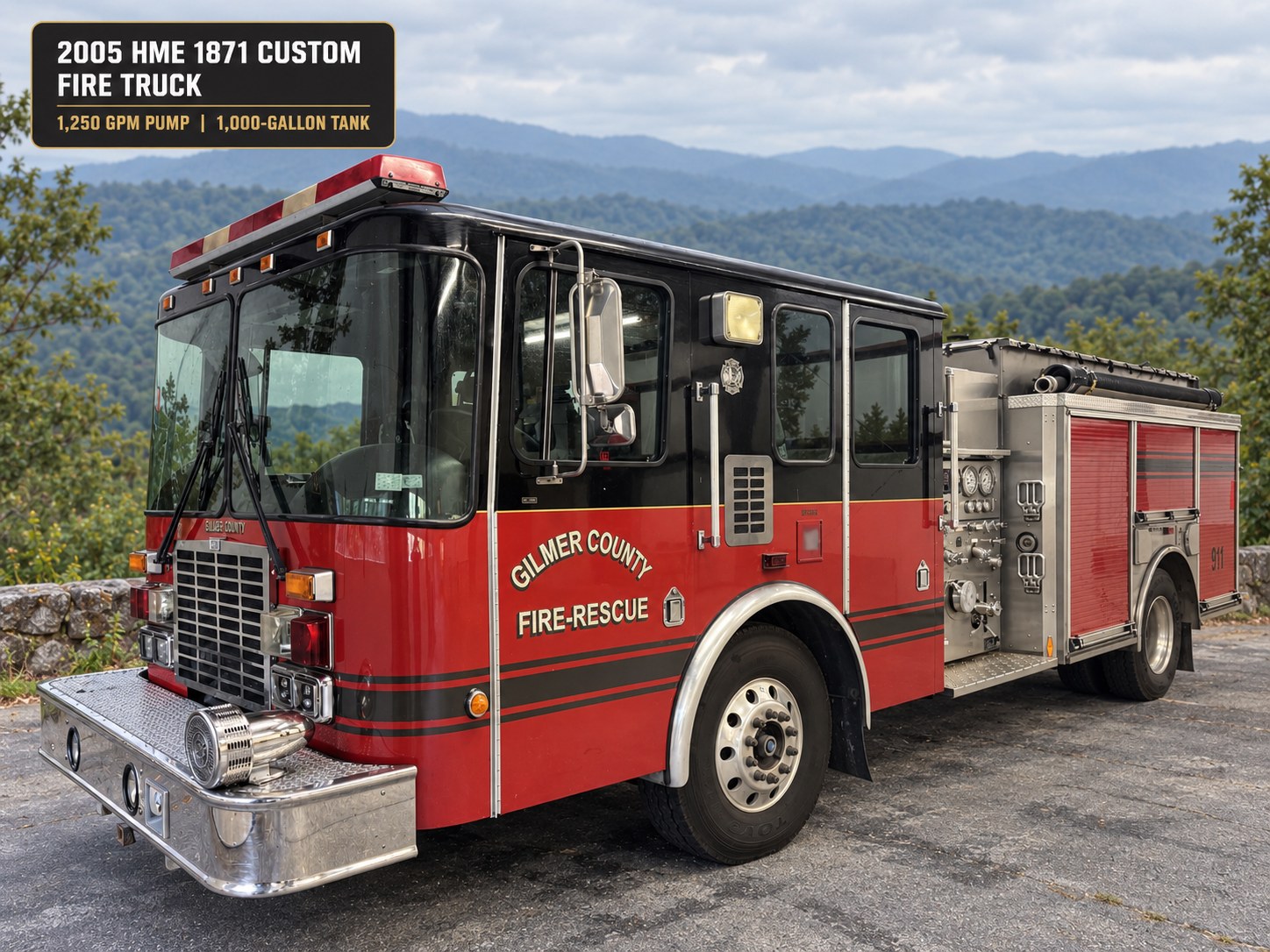
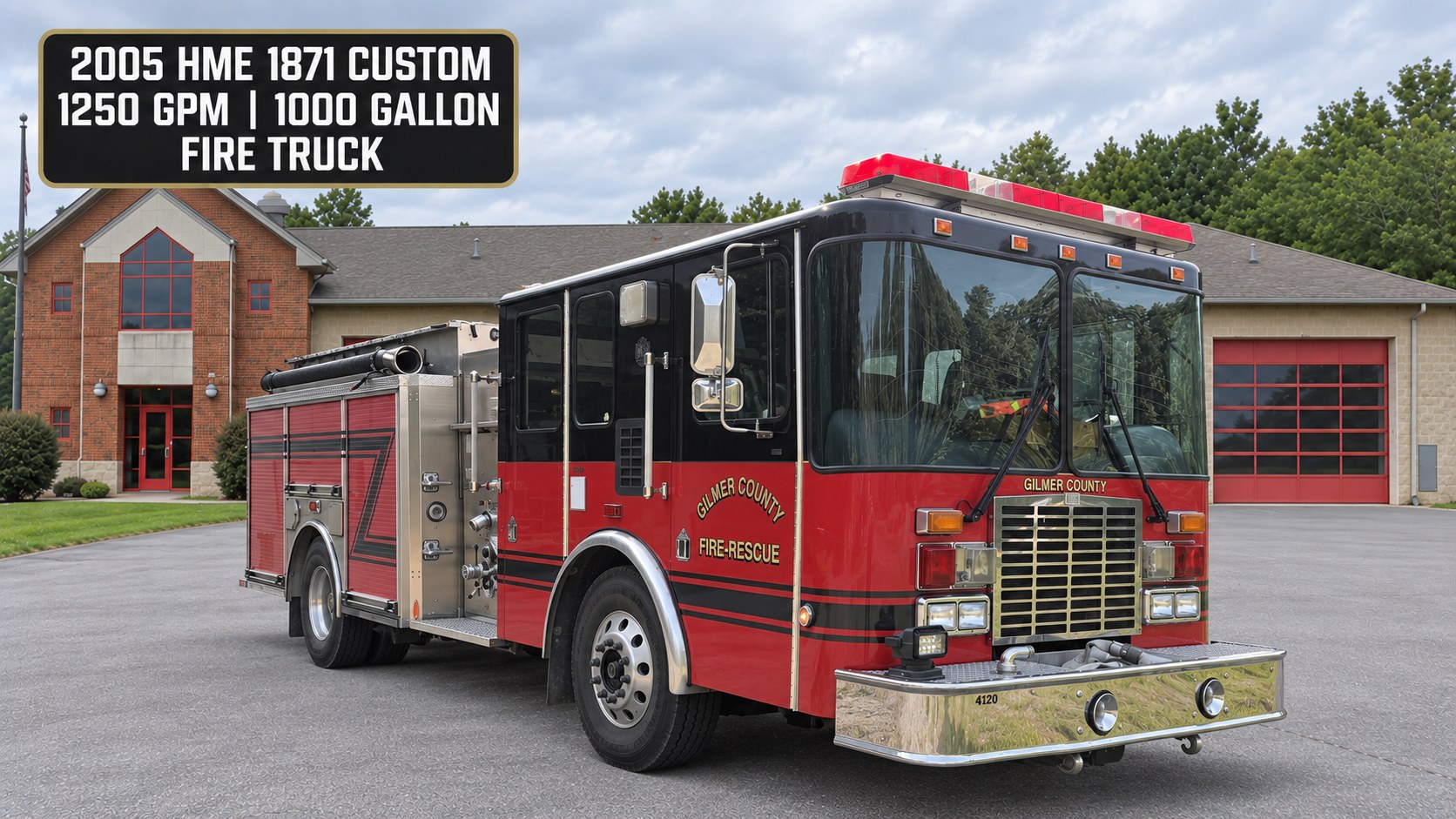
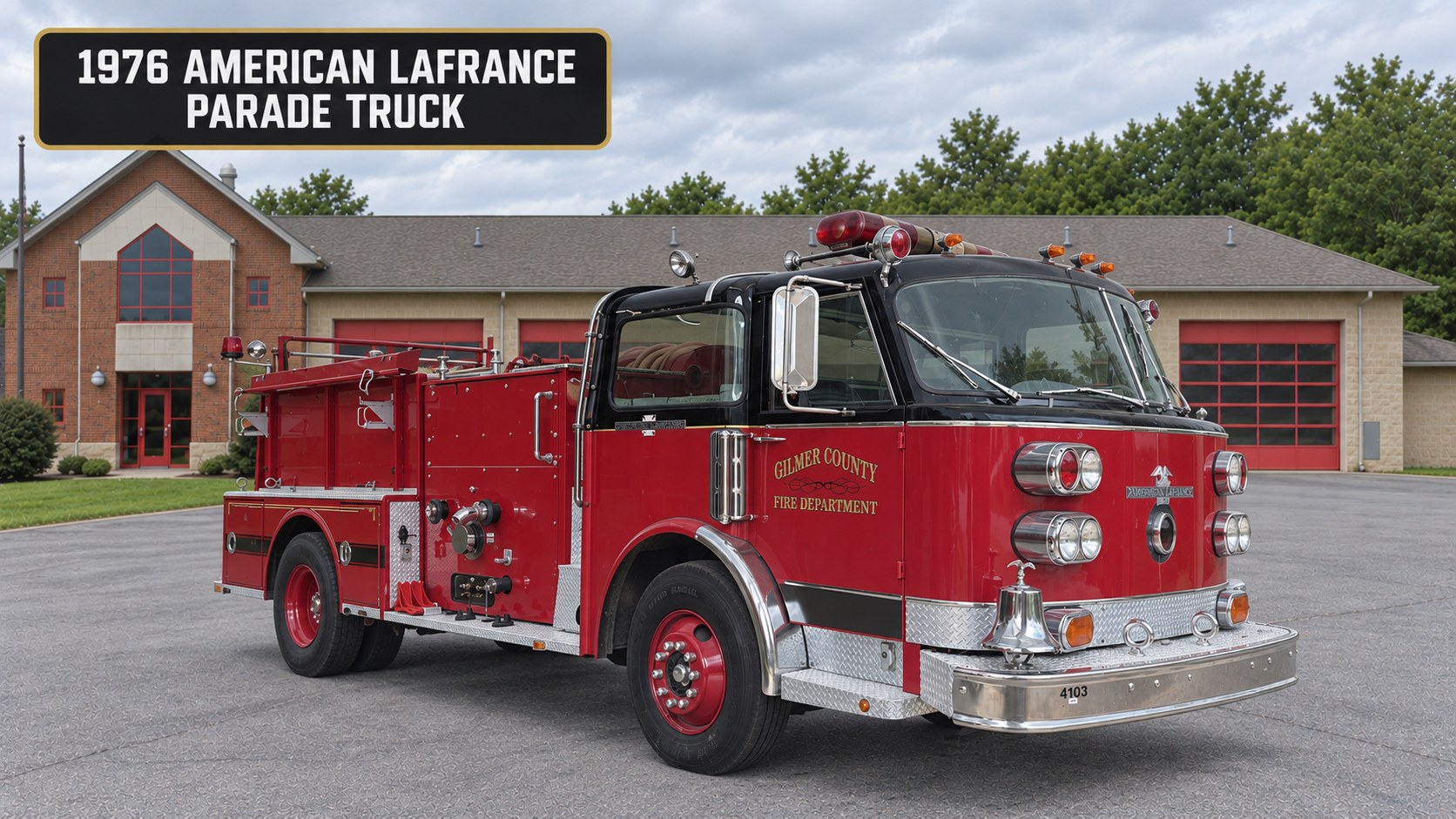
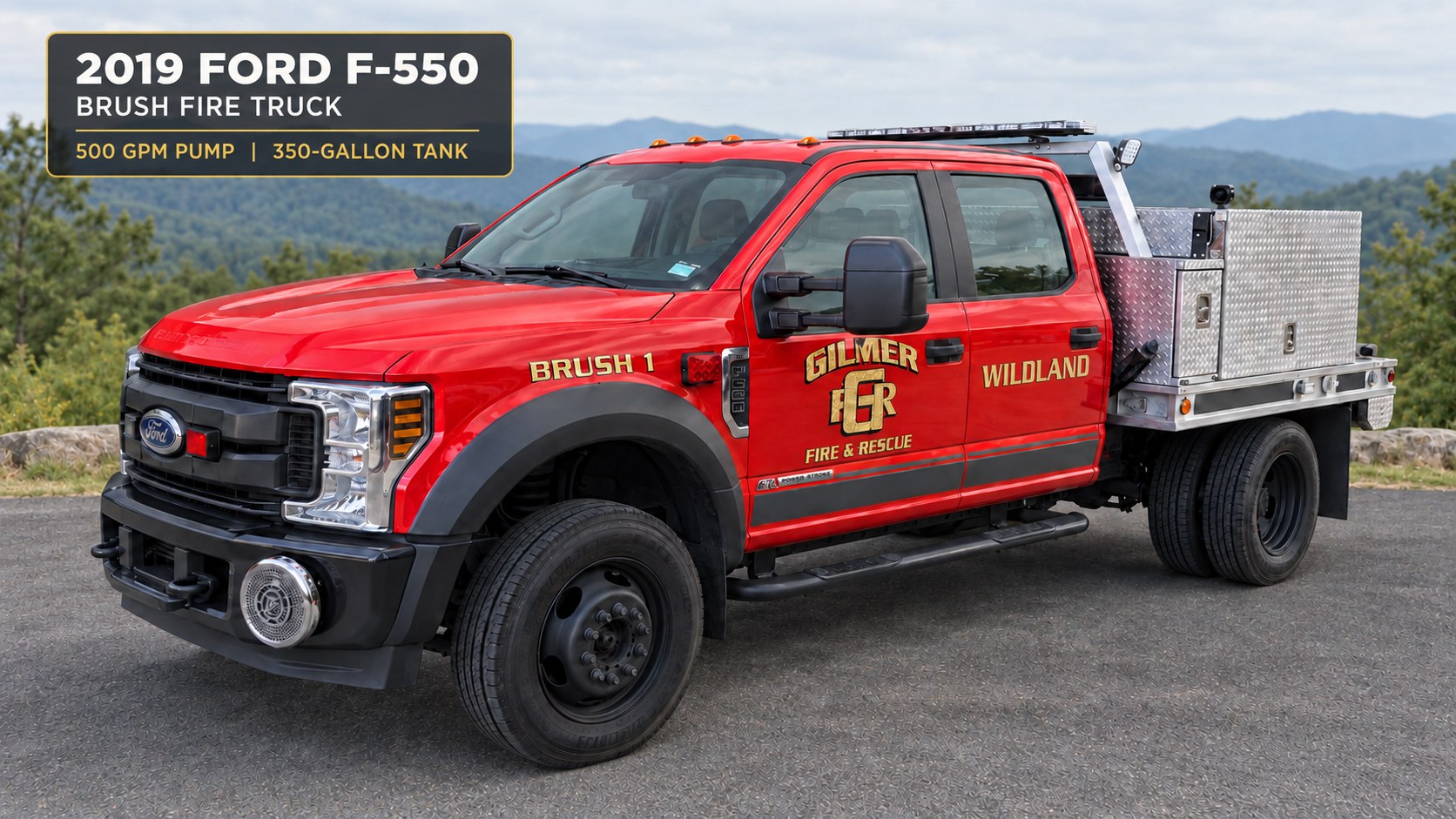
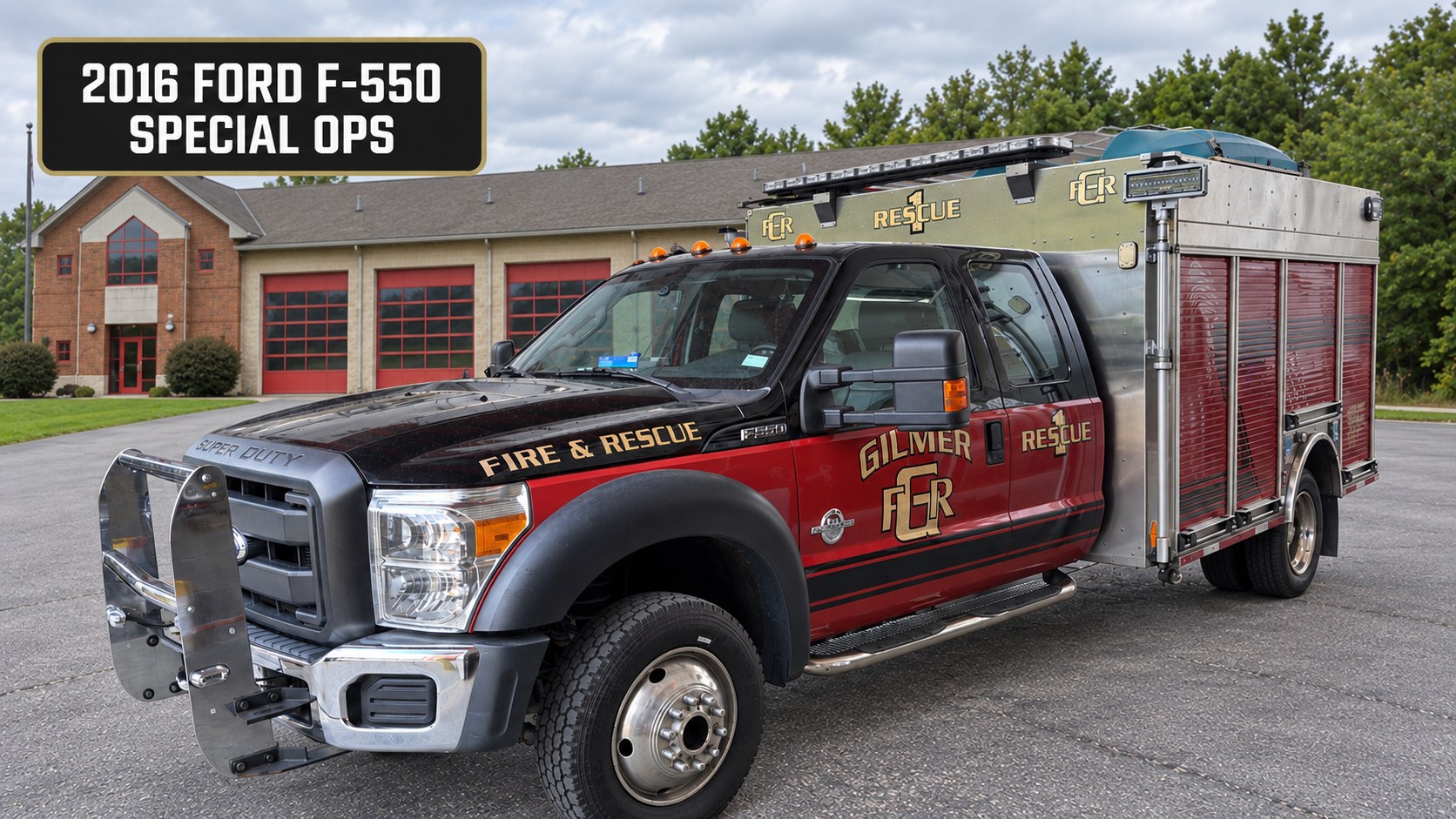
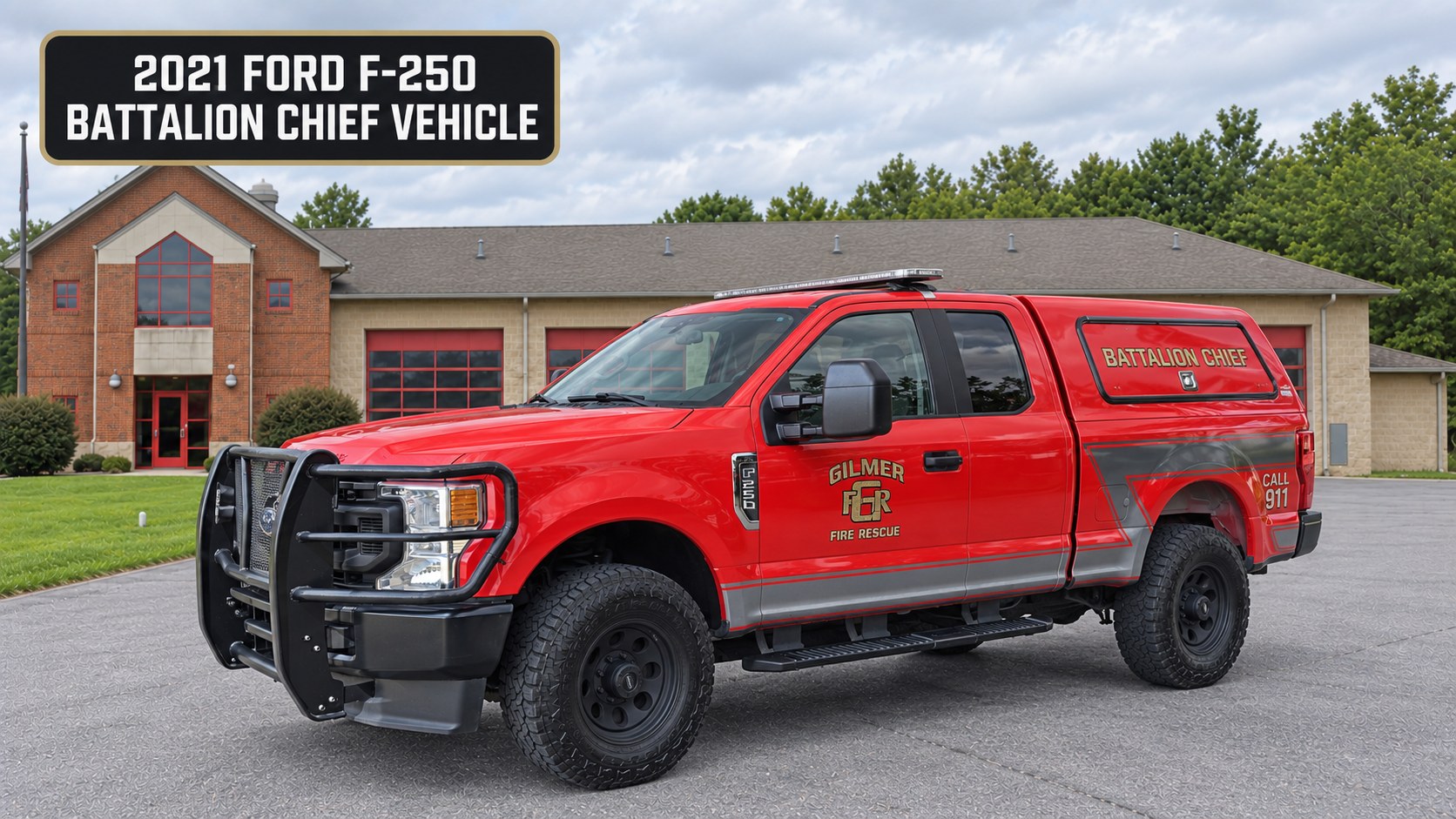
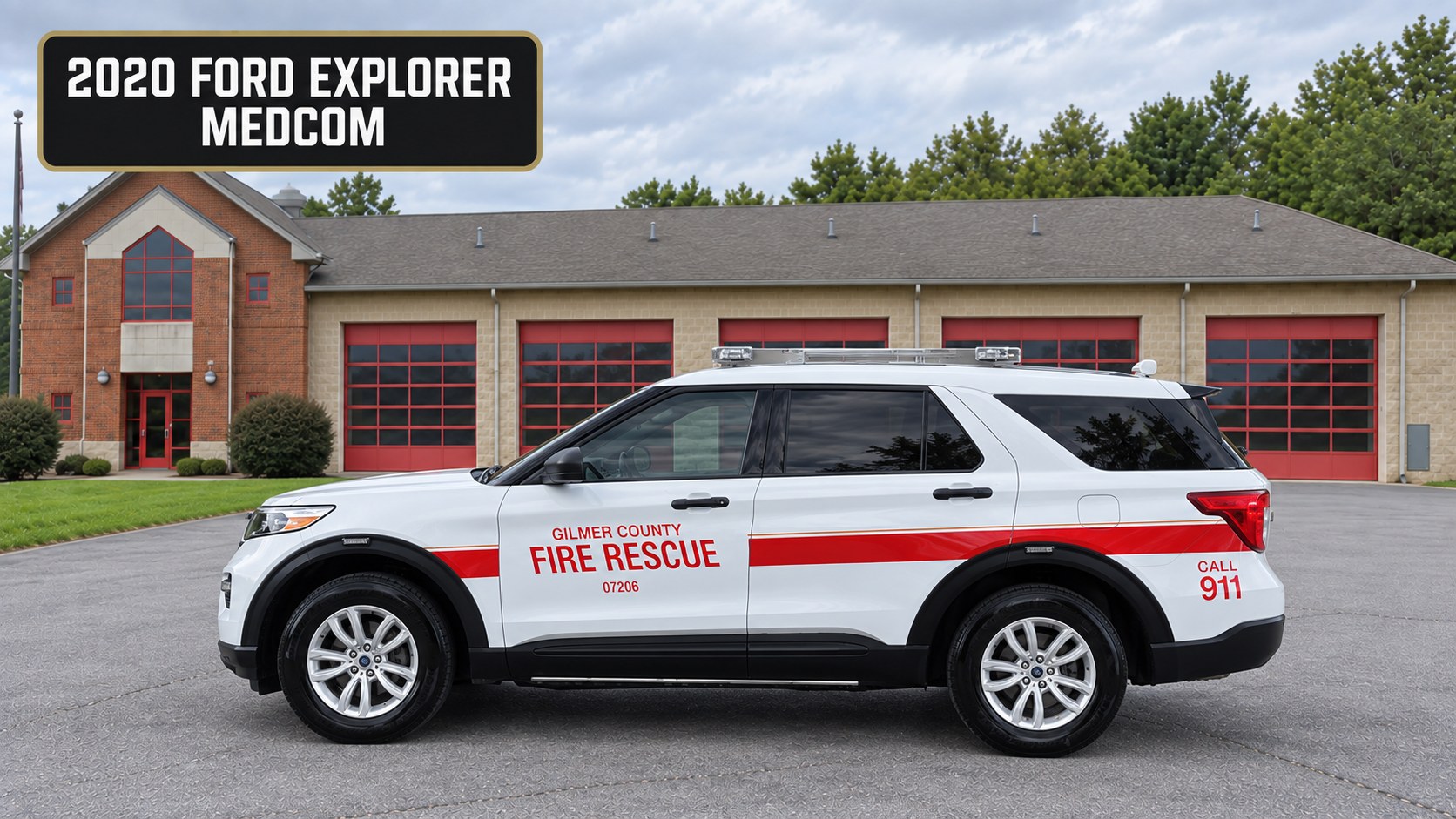
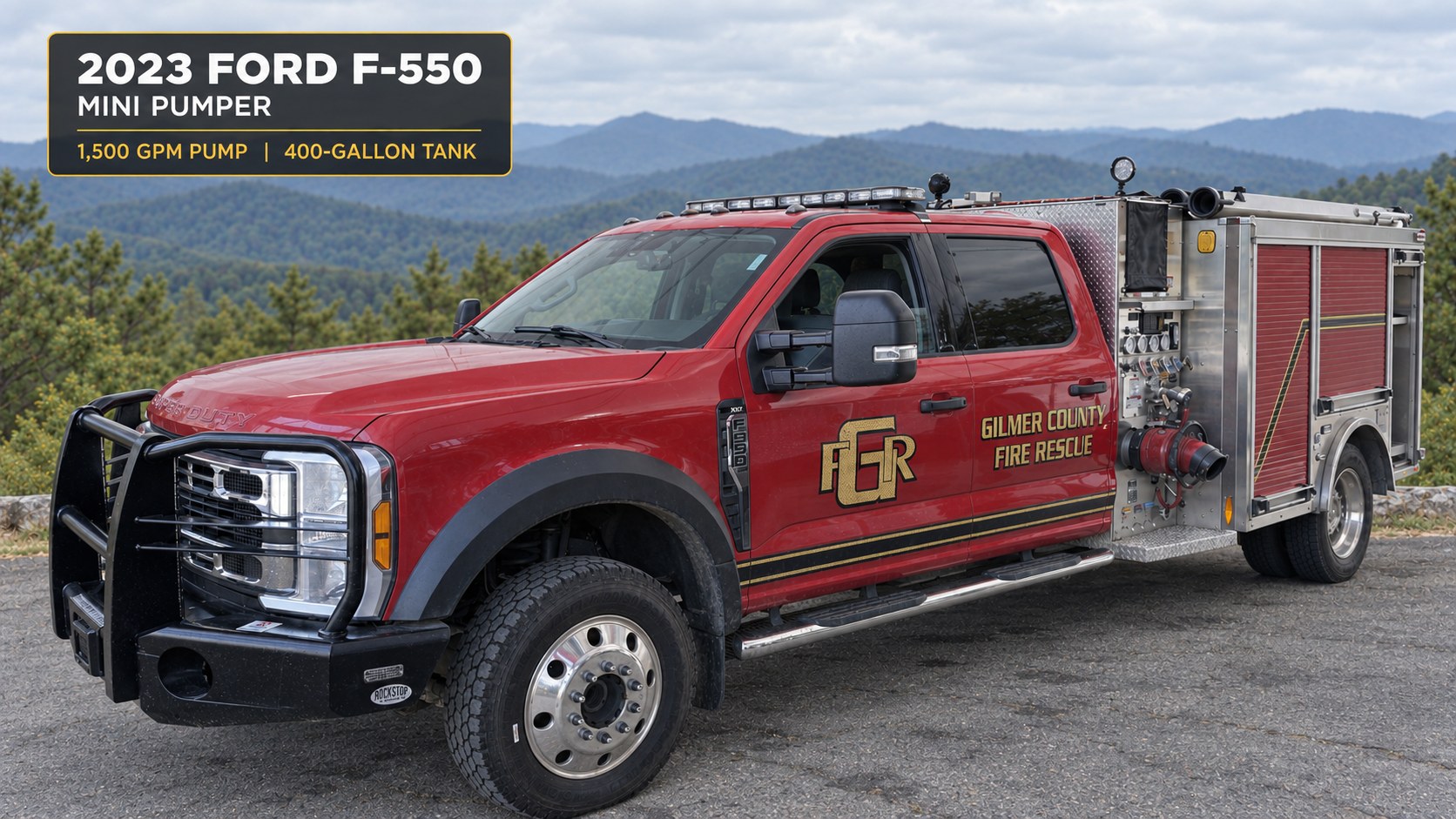
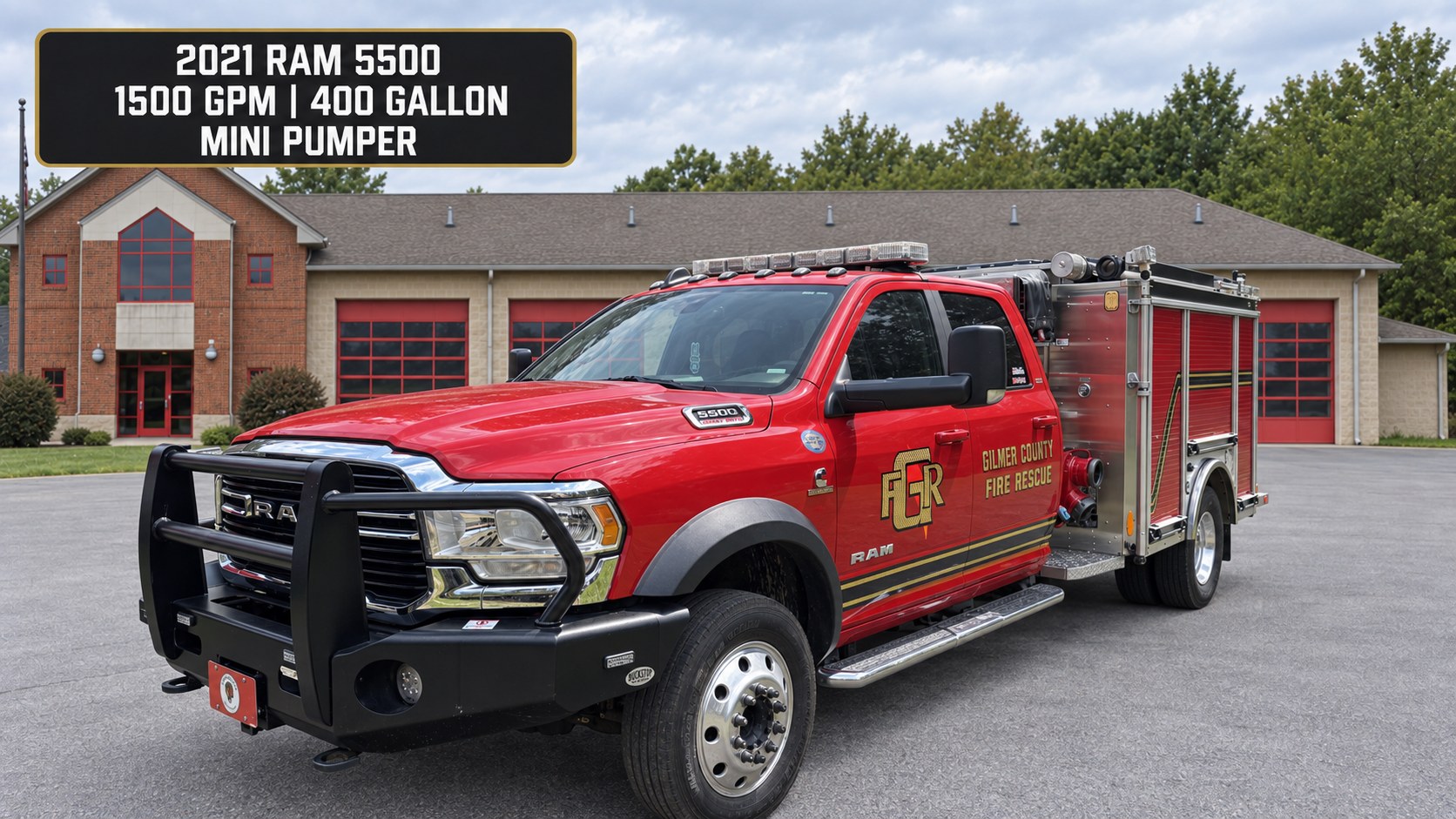
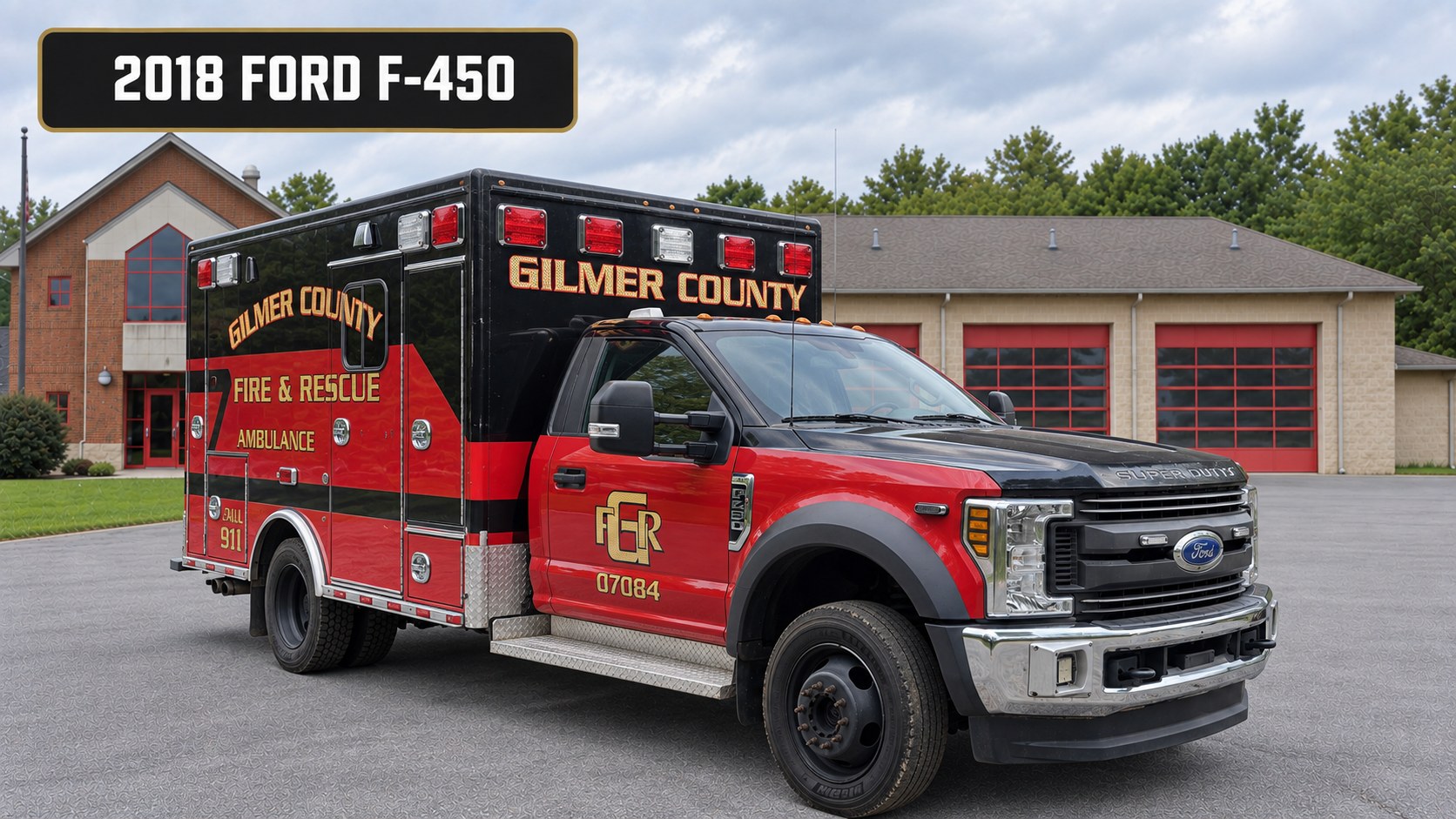
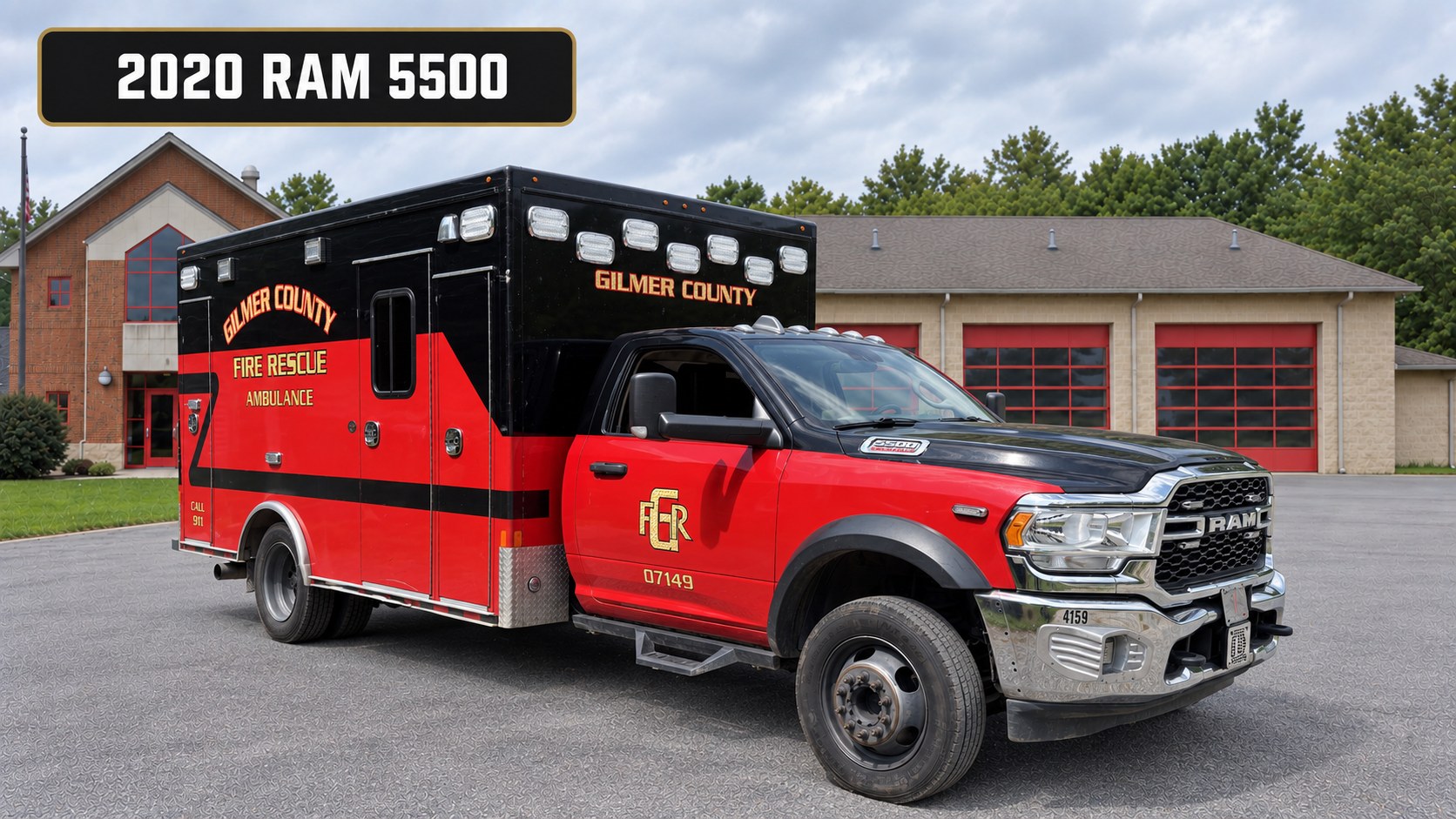
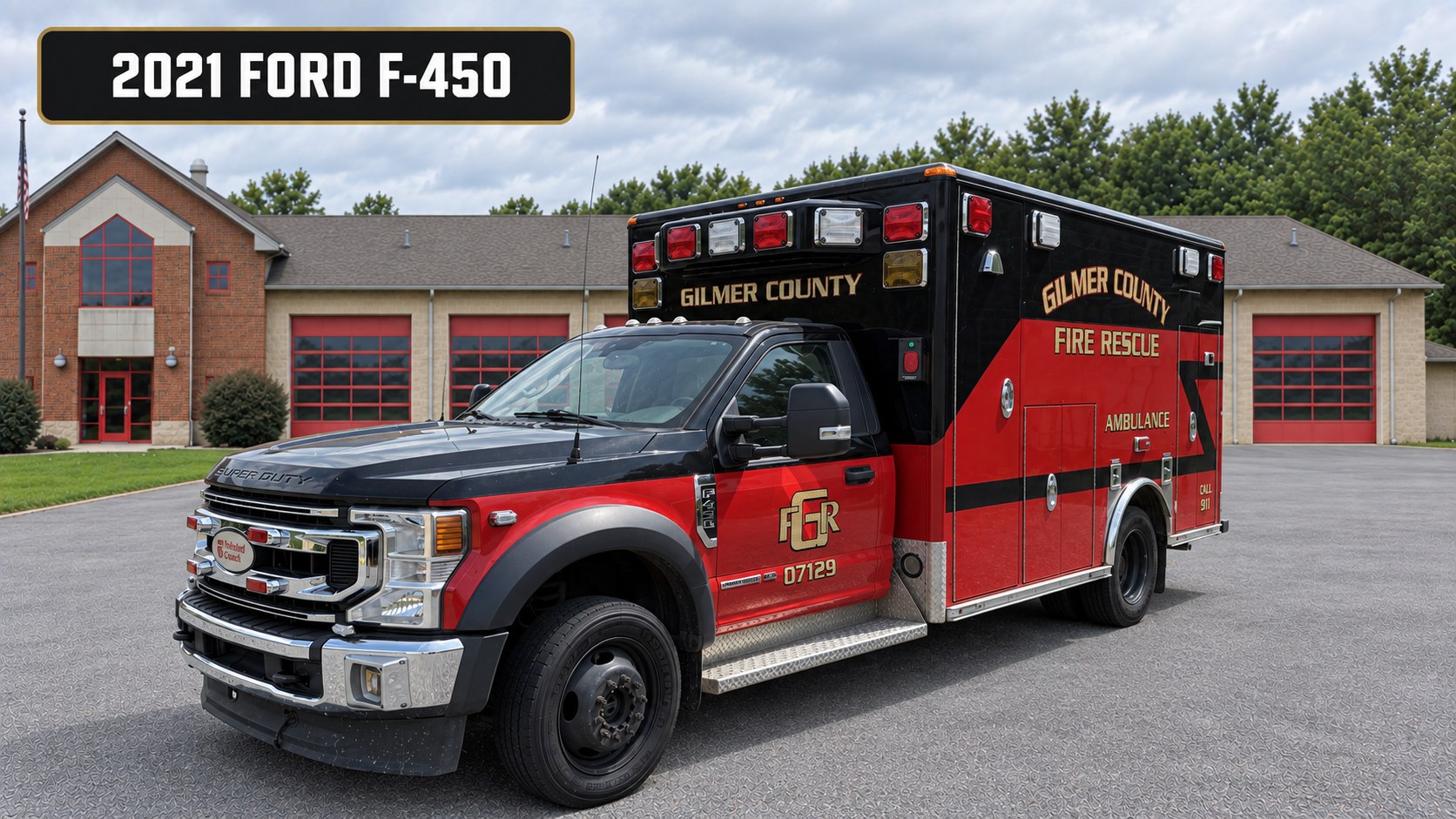
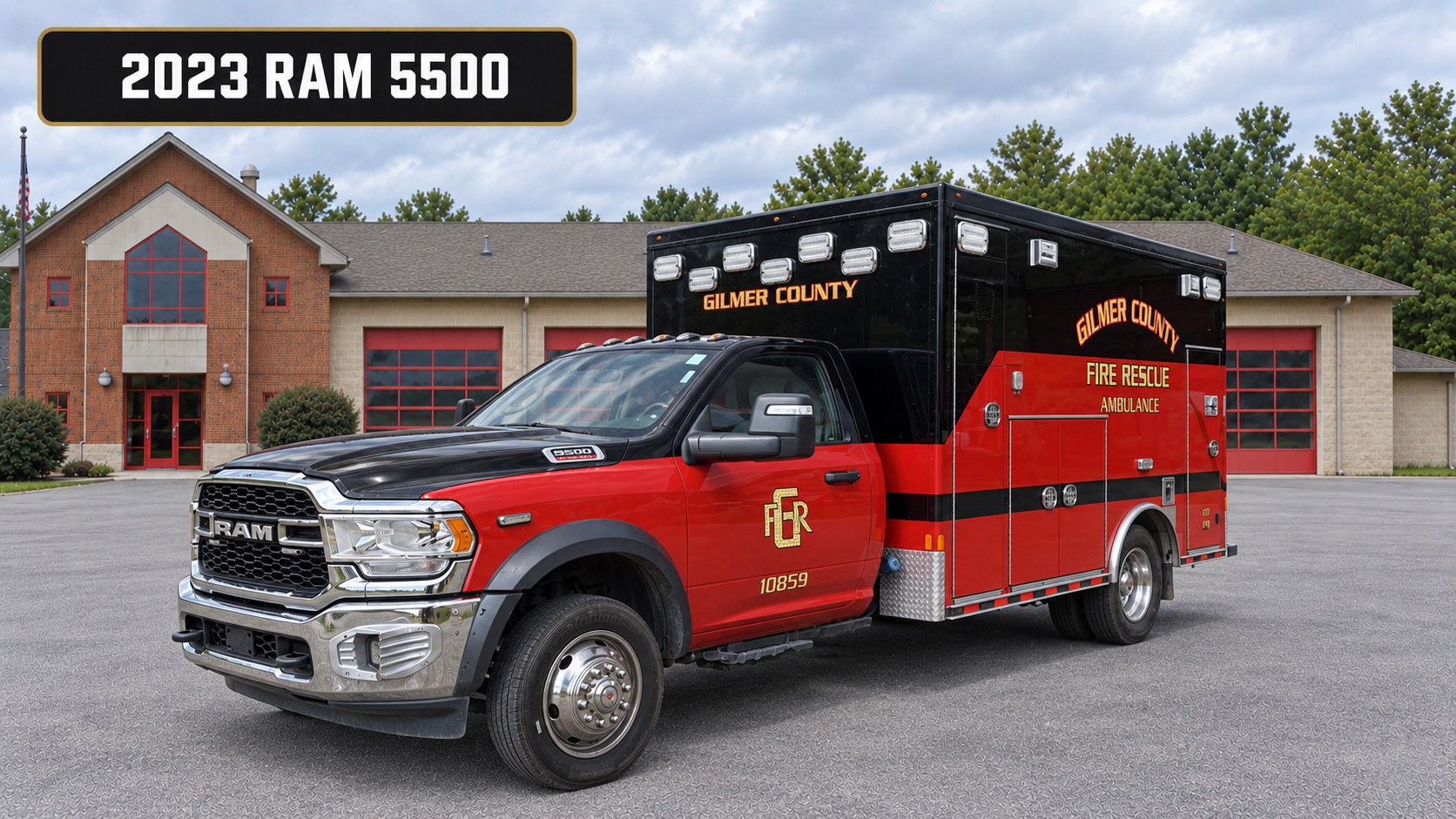
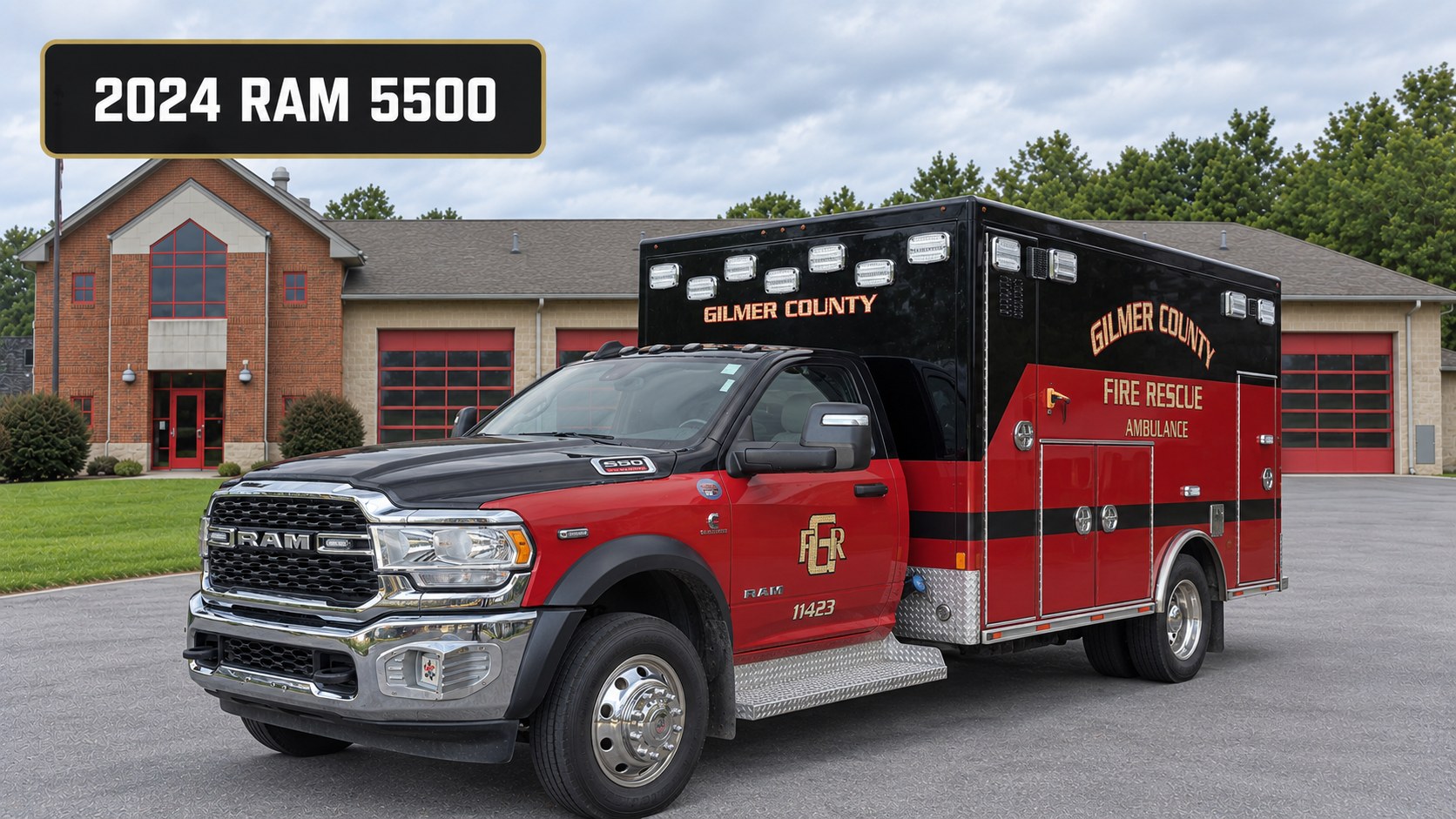
From ambulances and fire apparatus to specialty vehicles and support units, our Fleet Team keeps Gilmer County Fire Rescue ready to respond. Their work keeps equipment reliable, reduces downtime, and helps ensure crews have the apparatus they need when the call comes in.
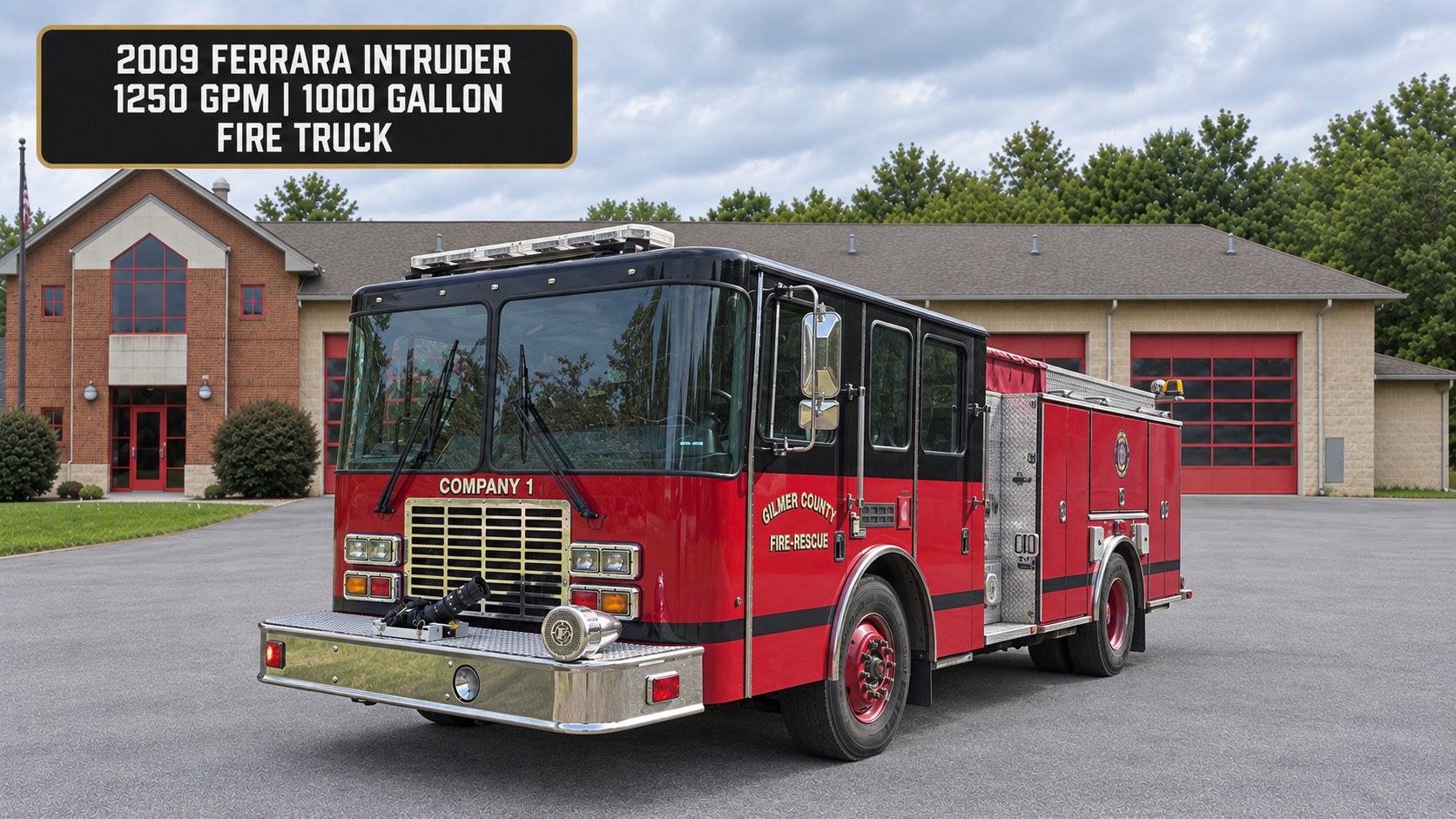
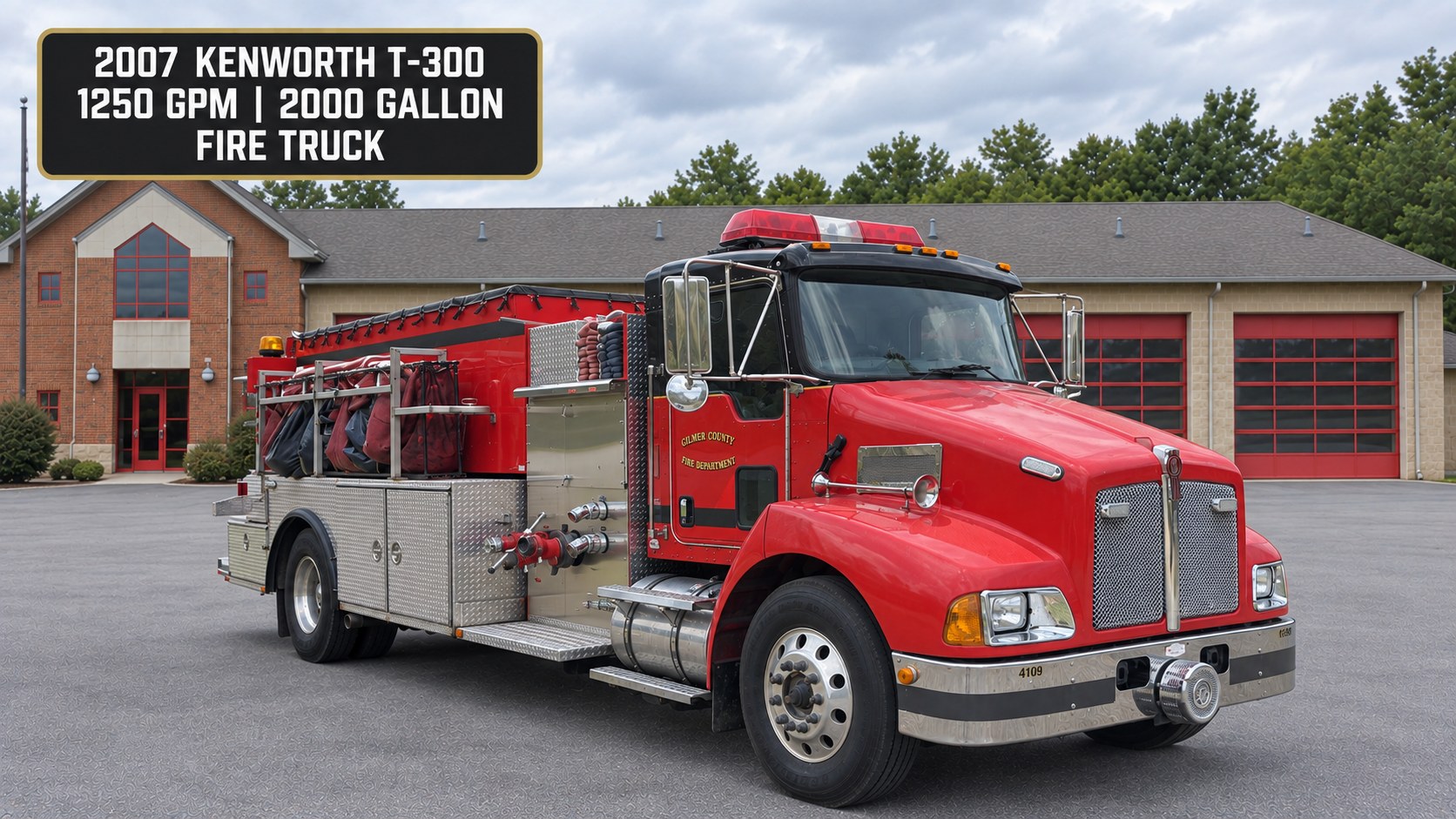
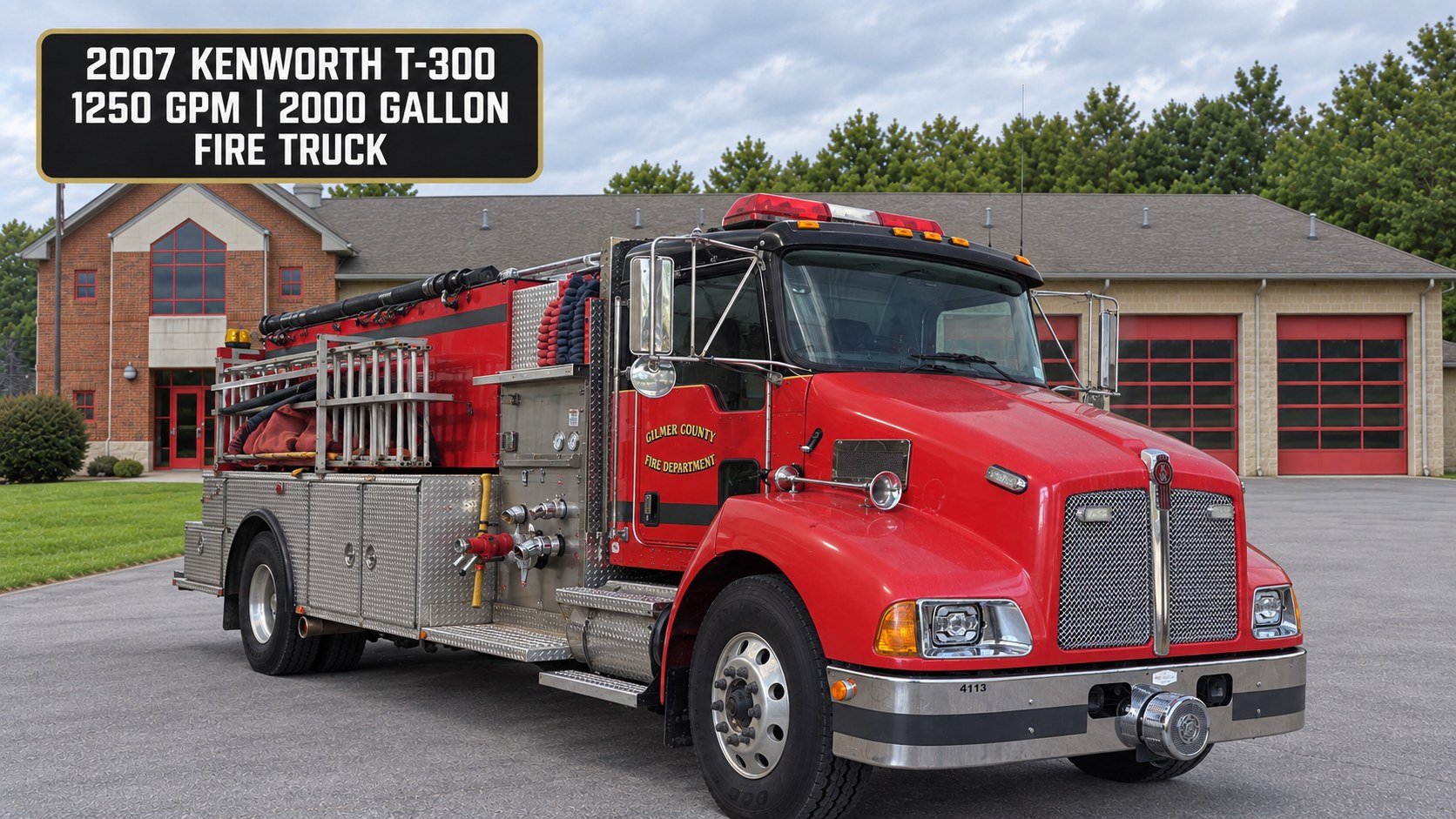
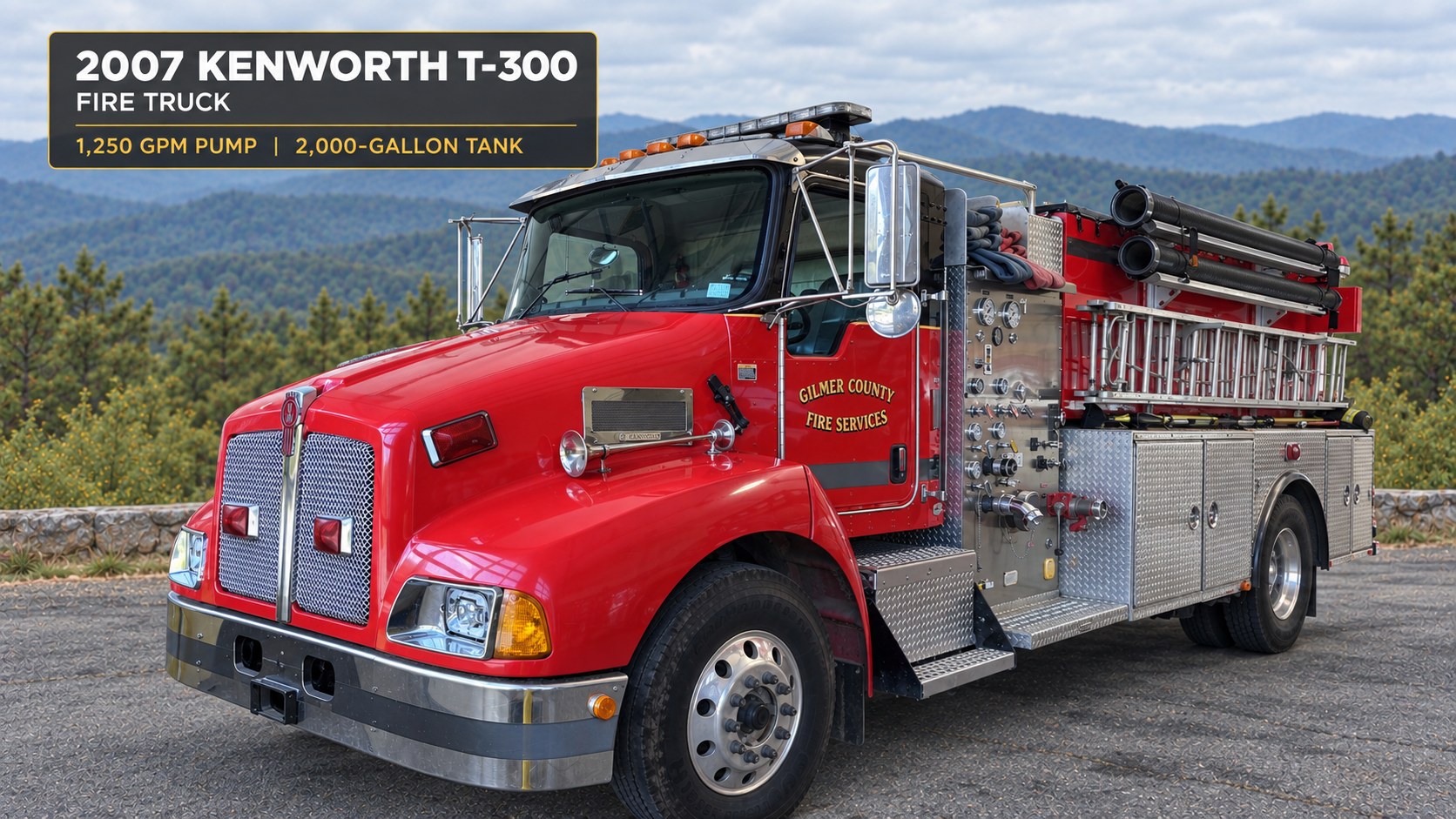
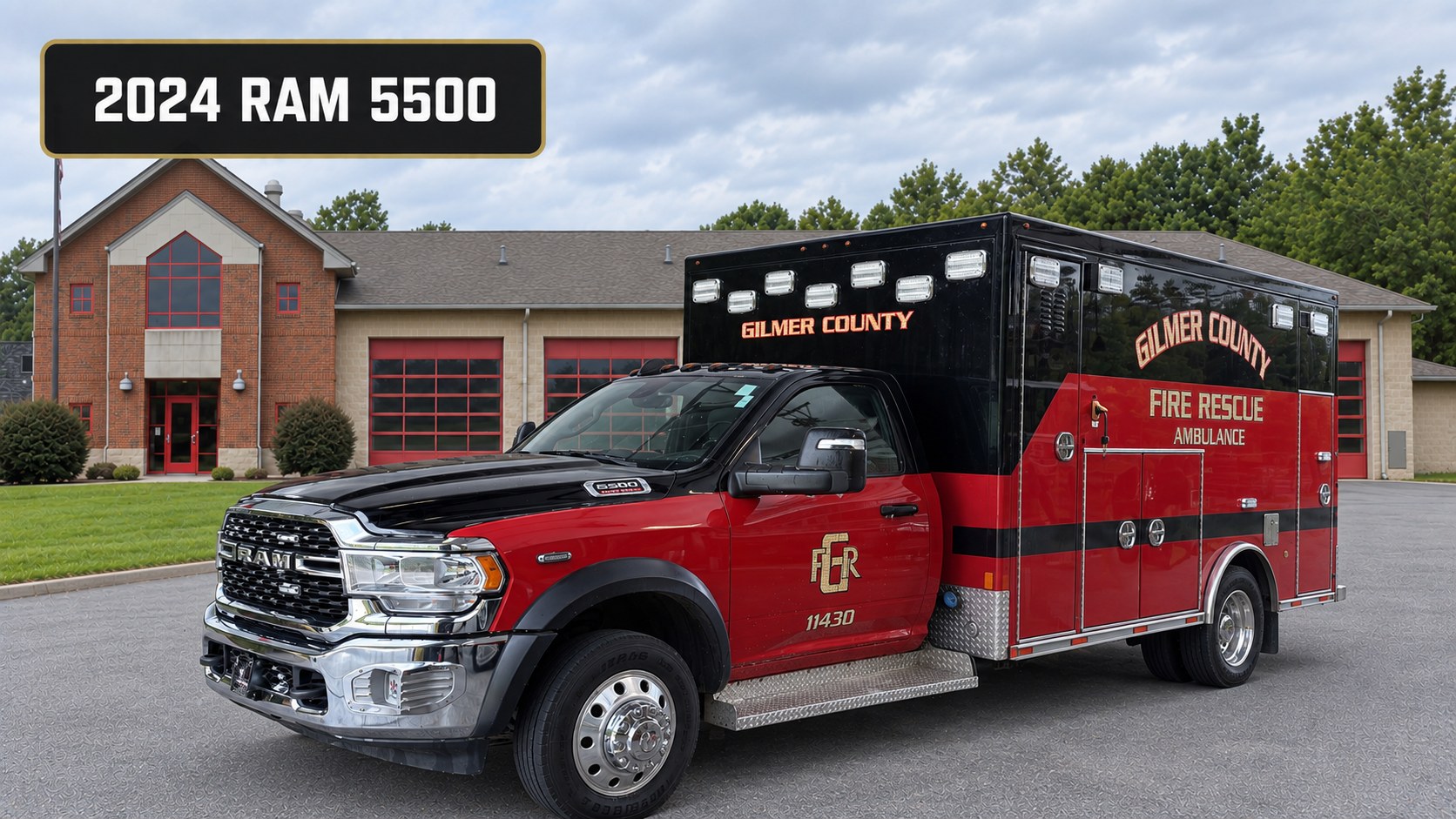
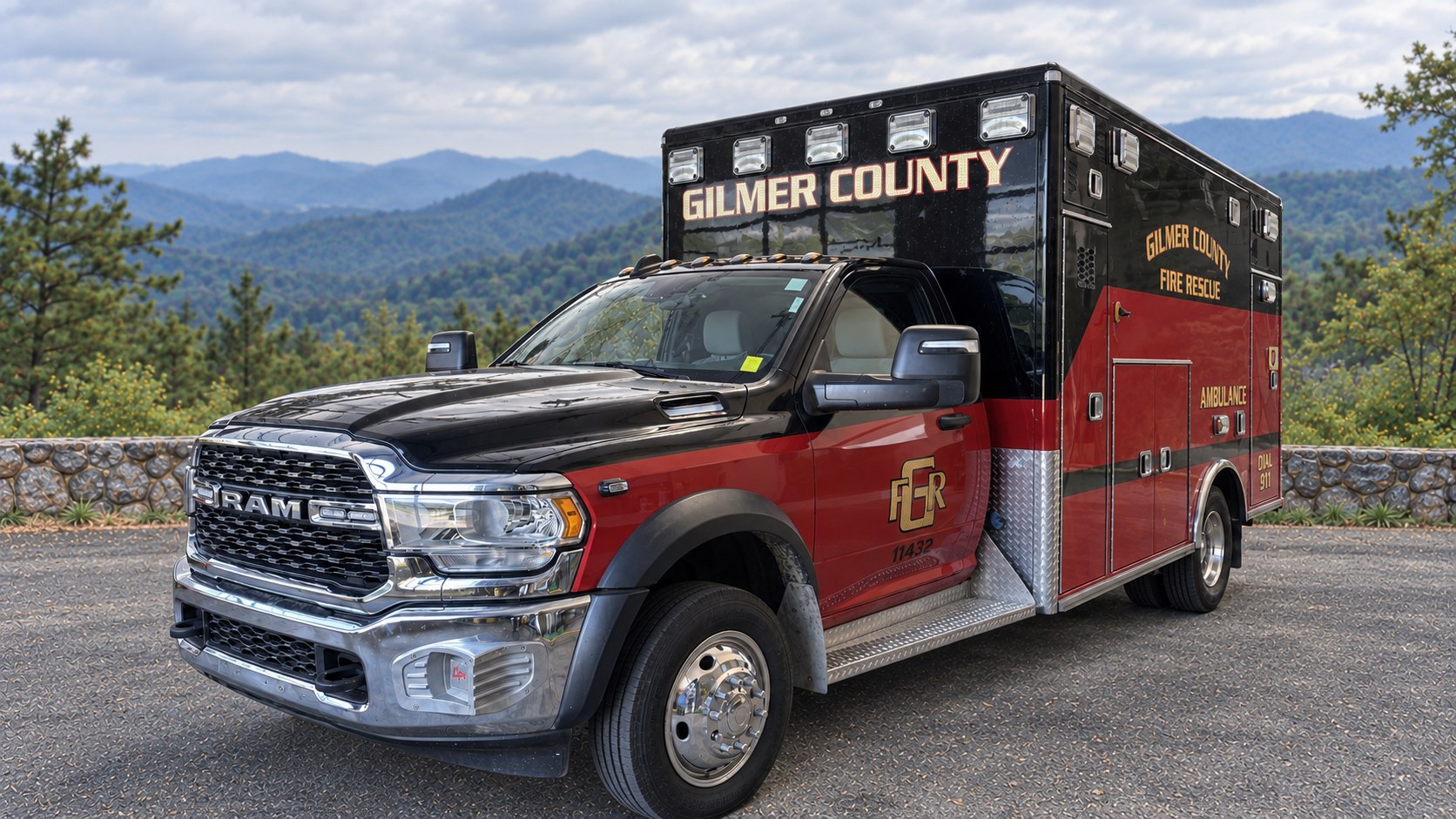
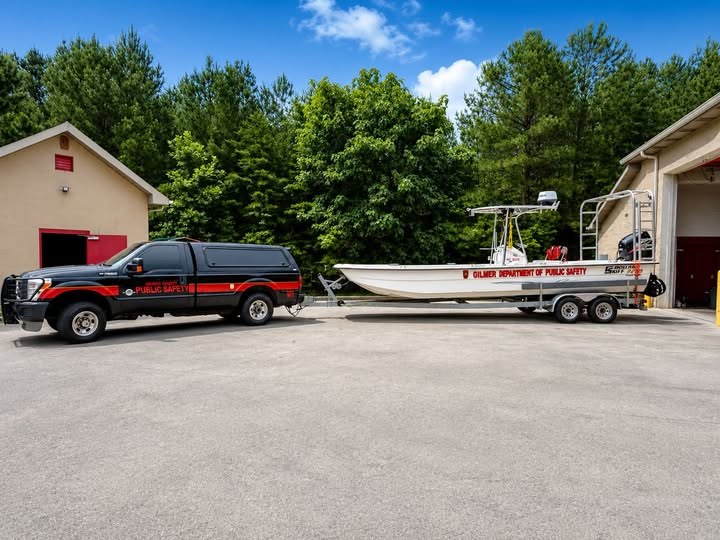
The units that answer the call.
Our current fleet of fire, rescue, and EMS apparatus staged across Gilmer County.
More to explore.
Recent updates & events.
Fall recruit academy applications now open
Firefighter I academy begins in October — apply by September 15.
New drone unit joins wildland response program
Thermal-imaging UAS now supports hotspot detection on brush and wildland fires countywide.
Station 3 open house & community day
Tour the apparatus bay, meet your crew, and learn hands-only CPR.
Wildfire season readiness: defensible space tips
Guidance for homeowners on the county's wildland-urban interface.
Gilmer Fire leads regional prehospital blood program launch
Gilmer County Fire/Rescue hosted the groundbreaking of a new tri-county program with Pickens and Fannin counties, placing life-saving blood products directly on ambulances. Coverage via Pickens Progress.
Contact & station locations.
For an emergency, call 911. Do not use website forms, email, or social media to report an emergency.
All 16 Gilmer County Fire/Rescue stations plus Dispatch are pinned. (The county's 17th station is operated by the City of Ellijay.) Tap any marker for the station name and address.
Career-staffed 24/7— Stations 1, 11, 12 & 14. All other stations are volunteer-response.